Why the Same Words Don’t Mean the Same Thing
By Rachid CHIHANI — April 2026 · 3 min read
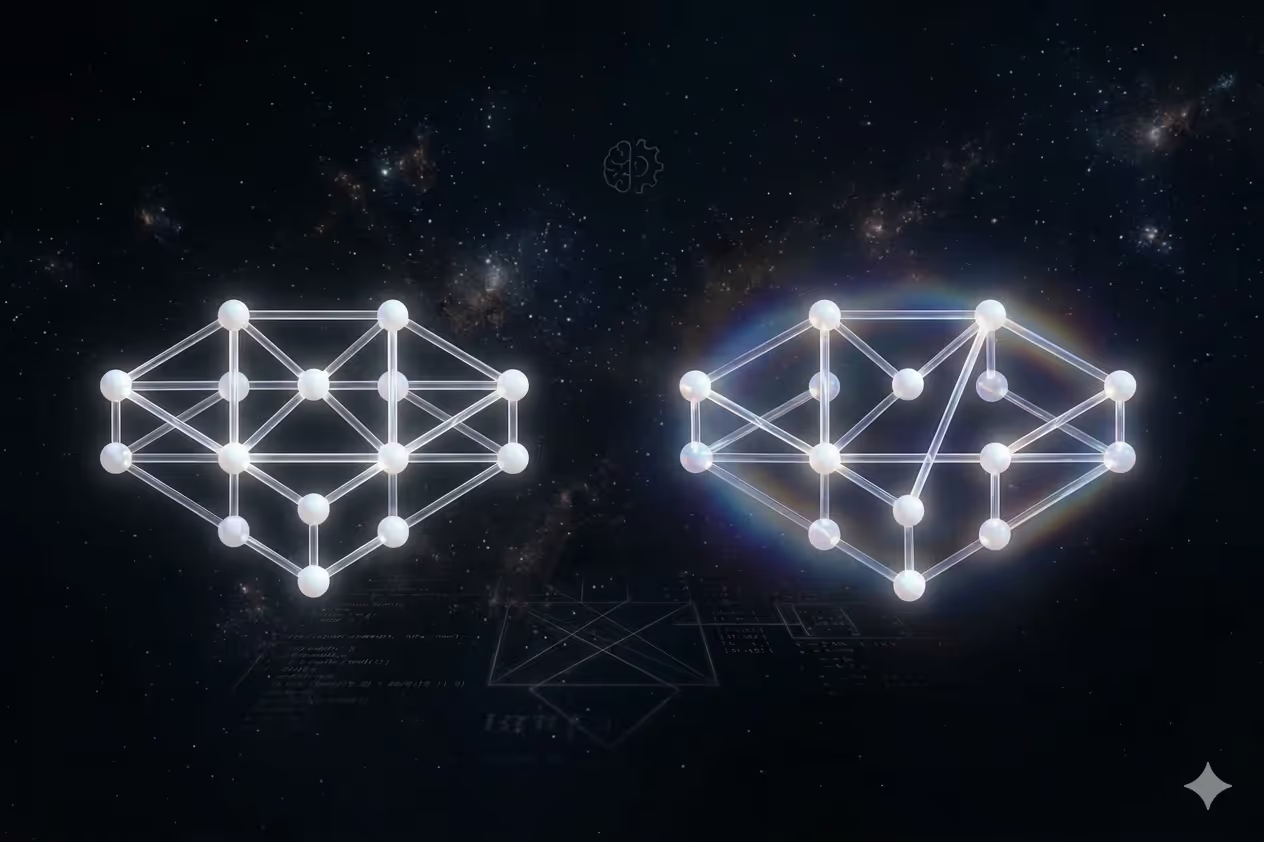
Most conversations appear clear.
The same words are used. The same facts are referenced. The same situation is described. On the surface, there is agreement.
And yet, different decisions follow.
The misunderstanding is not visible in the conversation. It appears in what happens next.
Two people leave the same discussion with different conclusions. Teams align in meetings and diverge in execution. Instructions are followed, but outcomes do not match expectations.
Nothing obvious is wrong.
The words were correct.
This is where the problem begins.
Meaning is often assumed to be carried by words. As if saying something ensures that it is understood in the same way. But words do not carry meaning on their own. They depend on context, experience, and interpretation.
The same statement can describe different realities depending on how it is received.
In simple environments, this difference can be absorbed. Misunderstandings are corrected, outcomes adjusted, and alignment restored. But as systems grow in complexity, this gap becomes harder to detect and more costly to resolve.
The issue is not that people communicate poorly. It is that communication itself is assumed to be more stable than it is.
Words remain the same. Meaning shifts.
In operational environments, this creates a specific type of risk. Decisions are made based on assumed alignment. Actions follow based on interpreted meaning. The difference between the two only becomes visible after outcomes diverge.
By then, the gap is already material.
This is why clarification often comes too late. The misunderstanding does not appear at the moment of communication. It appears in what follows — in delays, inconsistencies, and outcomes that no longer match expectations.
These are often treated as isolated issues. A missed instruction. A misaligned execution. A local failure.
But they are rarely isolated.
They follow a pattern.
The same types of divergence appear across teams, across projects, across systems. Not because the words change, but because the interpretation does.
Just as patterns are missed when events are seen in isolation, meaning is missed when words are assumed to be sufficient.
What appears as agreement is often only alignment at the surface level. Beneath it, different interpretations continue to operate, unnoticed until they produce different results.
This is why increasing clarity in wording does not always resolve the issue. More explanation does not guarantee shared understanding. In some cases, it only reinforces the illusion that alignment has been achieved.
The question is not whether something was said clearly.
It is whether it was understood in the same way.