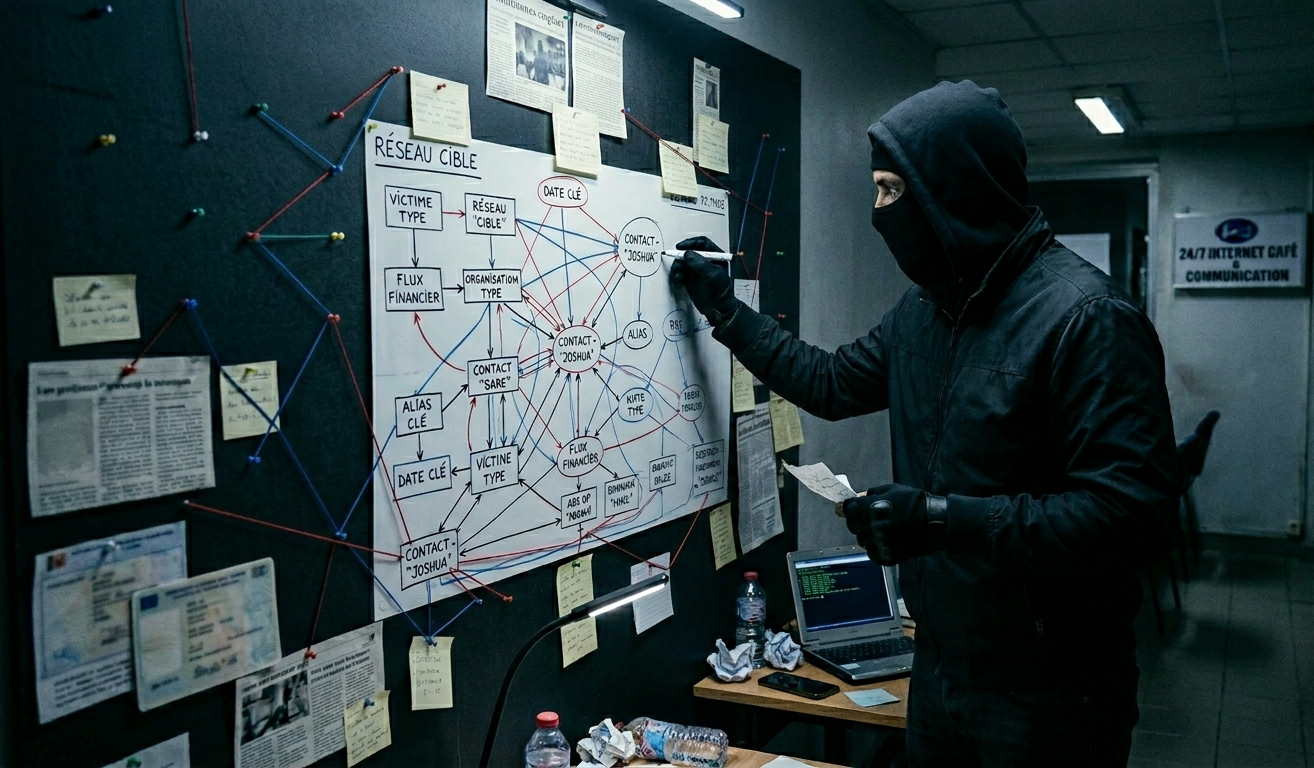
When Does a Coincidence Become a Pattern?
By Rachid CHIHANI Co-founder — Thinsaction — March 2026 · 3 min read

Most systems are evaluated one event at a time.
A transaction is reviewed. A signal is checked. A discrepancy is explained. Each case is assessed, resolved, and closed. If it does not cross a threshold, it is accepted.
This works — until it doesn’t.
Some problems do not exist within a single event. They only appear when events are seen together.
A transfer that arrives late. A system that slows down at the same hour. A discrepancy that appears, disappears, and returns days later. Each instance is small. Each one has an explanation.
Nothing stands out.
And so nothing changes.
What is missed is not the event. It is the repetition.
Not once. Not twice. But enough times to form something that is no longer random — even if it still looks that way.
There is no moment where these events present themselves as connected. They remain separated in time, context, and explanation. Each is treated as complete on its own.
This is where the gap forms.
Systems are designed to process events. They are not designed to hold them together. To connect them. To recognize when something is repeating in a way that matters.
As a result, patterns form without being seen. Not because they are hidden, but because they are not observed as a whole.
This is not a question of data. The data is already there.
It is a question of how it is seen.
The question is not whether these patterns exist.It is whether they are being seen.
© Thinsaction 2026 — No part of this article may be reproduced without attribution.